Introduction to Modern Sales Recruitment
Hiring strong salespeople today is hard work. It needs real focus, time and money, especially when targets keep rising and markets shift so quickly. If your business is hiring sales staff on a regular basis, you need a clear and consistent way of bringing in people who can perform well and grow with your team.
Recruitment can sometimes feel like a painful task that everyone wishes they could avoid. Many leaders know they must keep building their sales team, yet still find the process frustrating and draining. That tension is common, and it is one of the main reasons a more modern approach to sales hiring is so important.
Even with the latest recruitment technology, hiring is still demanding and time-consuming. The tools can help, but they do not remove the effort of writing good job ads, speaking with candidates and making careful decisions. It becomes even tougher when you are trying to do all this alongside your day job.
This article will walk through modern sales recruitment in a simple and practical way. We will look at how to build a comprehensive hiring process that fits your business, from defining the role to bringing a new starter into the team. At its core, sales recruitment is about finding, engaging, selecting and supporting people who can win business, build strong customer relationships and add lasting value to your organisation.
Key Skills to Prioritise When Hiring Sales Professionals
When planning sales recruitment, focus on the key qualities that determine performance to make sure your new hires will be able to build strong relations and deliver steady results.
1. Emotional Intelligence: Why It Matters in Sales Hiring
When hiring for sales, one of the most important qualities to look for is emotional intelligence. It enables people to read a client’s mood, respond with empathy, and create genuine trust, which leads to long-term relationships and repeat business.
2. Flexibility: Assessing Adaptability in Sales Candidates
Flexible sales candidates perform well when plans change and customers request something different on short notice. They can change their message, approach, and offer while staying calm and confident. This agility allows them to stay relevant and competitive in fast-changing markets.
3. Integrity: Identifying Trustworthy and Ethical Sales Talent
Integrity in the sales world means being honest, transparent and keeping your promises. Candidates who value ethical behaviour will gain trust, protect your reputation, and build lasting relationships.
4. Resilience: Evaluating a Candidate’s Ability to Handle Rejection
Resilient sellers do not dwell upon a lost opportunity. They learn from their mistakes, keep up their energy and keep chasing opportunities.
5. Growth Mindset: Spotting Candidates Who Strive to Improve
Candidates with a growth mindset look for ways to get better every day. They treat tough targets and new ideas as chances to learn and improve their sales results.
6. Confidence: Measuring Assurance Without Arrogance in Sales Reps
Customers feel safer when a sales rep has a healthy level of confidence. Look for candidates who can clearly articulate the value of their product without sounding arrogant, defensive, or pushy.
7. Effective Communication Skills: What Strong Communicators Look Like
Strong sales communicators explain ideas clearly and turn product features into simple benefits that make sense to the client. They handle questions calmly and give honest, well-structured answers that build trust.
8. Active Listening: A Critical Skill for High-Performing Salespeople
Active listening means paying full attention to the client’s words and actions. It helps salespeople discover real problems and then match the solutions that fit these needs.
9. Collaboration: Identifying sales professionals who are team-driven
Salespeople who collaborate with each other to solve customer issues are more likely to share ideas, solicit input from their colleagues and work together. They leverage the collective skills of the team to deliver better results and better answers to clients.
10. Relationship-Building Abilities: How to Test for This in Interviews
Strong relationship builders invest time in understanding their clients’ needs and wants. They are always in touch, offer helpful support and build partnerships that last beyond the initial sale.
Understanding The Full Sales Recruitment Lifecycle
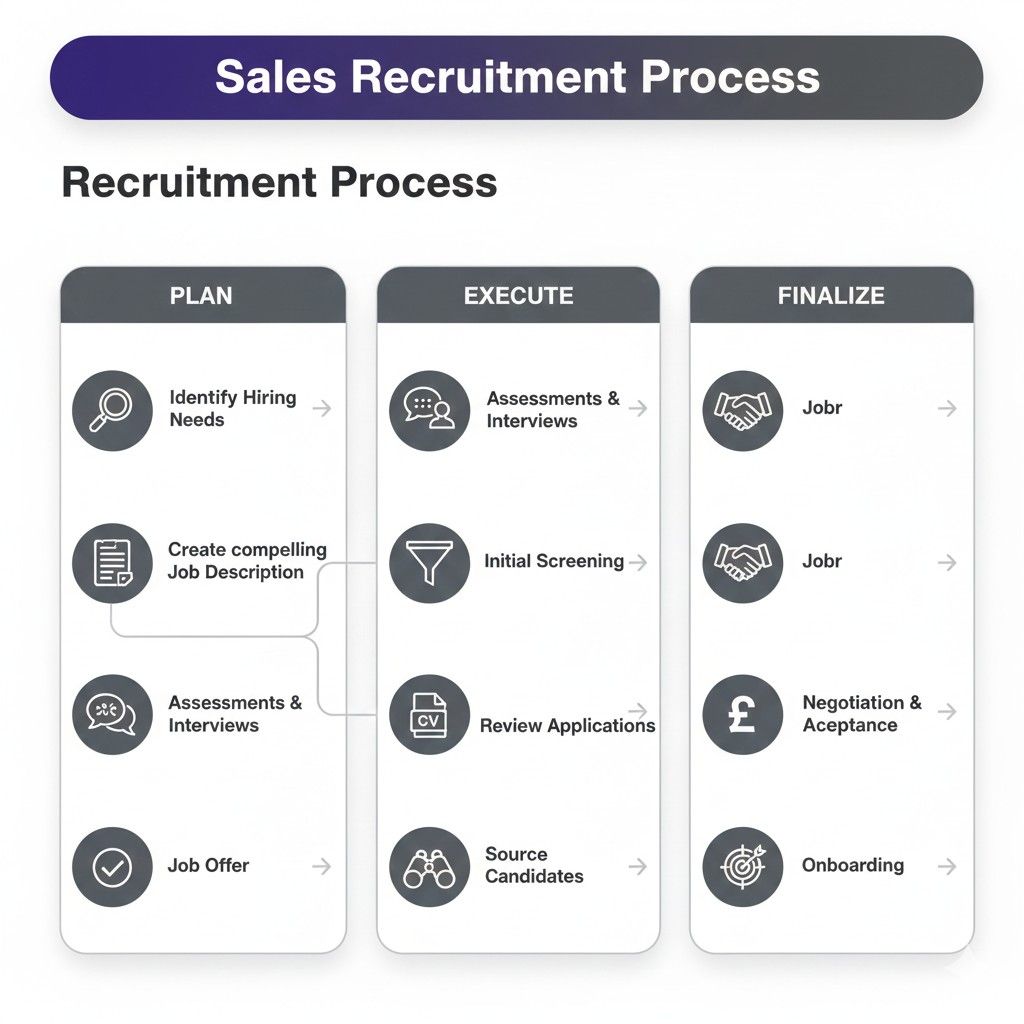
How to Hire the Right Salesperson for Your Team
Hiring the right salesperson for your team starts with a clear, structured approach rather than a quick hire. A strong sales recruitment strategy focuses on the mix of skills, behaviours and values your team needs. When you know this, you can spot people who will add real, long-term value to your business.
The Most Effective Methods to Attract and Recruit Top Sales Talent
Identifying and Defining Your Sales Hiring Requirements
Ask yourself these questions:
How many salespeople do you need?
Start by looking at your revenue goals, your current pipeline and the workload on your existing team. This allows you to determine the realistic number of salespeople required to meet targets while avoiding unnecessary costs.
What kind of sales role are you looking for?
Be clear about whether you need someone to focus on new business, account management, or a mix of the two. Connect the role’s daily tasks to your market, your customers, and the current stage of your business.
What qualifications and skills matter most?
List the must-have skills, experience and behaviours of the candidates before you start searching. Think about the skills your sellers need to sell your products, your background in the industry, your sales process, and the “soft skills” that will help your overall strategy.
What does your ideal candidate profile look like?
Create a clear profile of the person who will excel in the role. Include their typical background, strengths, career motivations, and the culture in which they perform best.
What market and competition are they going to face?
Examine your key customer segments and major competitors. Consider how a salesperson will stand out, gain trust, and present your offer so that it feels unique and more valuable than other options.
What kind of sales approach will they take?
Decide whether your team relies primarily on consultative selling, solution selling, high-volume activity, or a combination of these methods. The answer will influence the type of salesperson you target.
What assistance and tools will you provide?
Take note of the systems, training, marketing support, and leadership that your new hire can expect. This makes it easier to determine whether candidates have previously worked with similar tools or will require additional guidance.
Why do you think this hire will be successful?
As a way to measure performance, you could look at things like revenue, margin, activity levels, and customer satisfaction. Share these during the hiring process so that candidates understand what is most important and how they will be selected.
What return on investment do you expect?
Consider how this salesperson will affect revenue, profitability, and overall business growth. This allows you to establish realistic expectations and create a business case for each hire.
Step-by-Step: How to Successfully Recruit a Sales Professional
Hiring for a sales team can feel demanding, but a clear process makes it much easier to find the right person. When you think through each stage, you save time and avoid many common hiring mistakes. You also show candidates that your organisation is professional and that you value their experience.
Clarify the role and write the job description
Begin by determining exactly what you need this salesperson to do, such as winning new business, managing existing clients, or a combination of both. Write a job description that explains the role’s purpose, daily responsibilities, who they report to, and what success looks like in the first year. Include the experience, qualifications, and personal skills that truly matter, and highlight the support, benefits, and culture that make your organisation a good place to work.
Create a clear and honest job advert
Your job advert should be more concise and lively than the full job description, while still being accurate and truthful. Start with a line that speaks to ambition, development, or realistic earnings, so it catches attention as people scan job boards. Be upfront about location, working pattern, and salary range, then add a short overview of the company, the main responsibilities, the key skills, and how to apply.
Make the advert easy and appealing to read
Keep the layout simple, with clear headings and short paragraphs, so that the advertisement is easy to read on a phone or laptop. Use plain, friendly language that sounds like a real person, rather than corporate jargon, and avoid long, complicated sentences. Adding your logo and other brand elements helps your advert stand out and gives candidates an early feel for who you are.
Source candidates in the right places
Once the advert is ready, post it on the job boards and social channels that your ideal candidates actually use. Share it through your own team, your wider network, and relevant industry groups, because referrals often bring strong hires who already understand your market. You may also want to work with a specialist sales recruitment partner, such as FLSR, which can help you reach experienced candidates and manage the early screening work.
Review applications efficiently
Use recruitment software or at least a simple tracking system so you can stay on top of incoming applications. Apply clear criteria to remove people who do not meet basic requirements, such as core skills, right to work, or realistic travel to the location. Aim to respond quickly, even when you are sending a polite rejection, as this protects your reputation and keeps good candidates interested.
Screen candidates with short calls
Before inviting people to a full interview, run brief phone or video calls to check the important things. Confirm their sales experience, salary expectations, notice period, and overall interest in the role and your company. Pay attention to how they listen, explain their background, and build rapport, because these are strong signals of how they may perform with customers.
Interview and assess for sales success
Plan structured interviews that explore real sales situations rather than just walking through the CV. Ask candidates how they find leads, move opportunities through a pipeline, and handle common objections, and look for clear steps and outcomes in their answers. You can also see how candidates prepare, listen and adapt on the fly by having them take part in role-plays, make short presentations or do sales-related chores.
Check references and make the offer
When you have a preferred candidate, speak to former managers or customers where possible. You can compare the feedback you receive with what was said during the interview. If everything is in order, send an offer that includes salary, commission structure and benefits, as well as the start date.
Negotiate fairly and act quickly
Expect some discussion about pay or work flexibility, and decide in advance where you can give ground and where you must hold firm. Keep the process moving, because strong salespeople are often looking at more than one opportunity at the same time. A clear, prompt offer shows that you are serious and reduces the risk of losing your chosen candidate to a competitor.
Onboard and retain your new hire
Good hiring does not stop when the contract is signed. Make sure your new employee feels comfortable by planning a welcome and training period. Give them clear targets, the tools and data they need, and regular time with their manager in the first few months, and check in often on progress. To keep strong salespeople for the long term, continue to offer coaching, recognition, fair rewards, and a positive environment where they can grow their skills and career.
Building a High-Impact Sales Recruitment Strategy
Hiring strong salespeople is one of the most reliable ways to grow revenue. A clear, well-planned recruitment strategy helps you attract the right people, move with confidence, and avoid expensive hiring mistakes. When each step is thought through, you have a simple way to build your team.
Define the role with clarity
Begin by deciding what the sales role must deliver, such as new business, account growth, or a balance of both. Set out the key tasks, level of experience, and any must-have qualifications so candidates can judge if the role matches their skills. Include an overview of your culture and values so people understand what it is like to work in your organisation.
Use a mix of sourcing channels
You reach more suitable candidates when you search in several places rather than just one. Share the vacancy on your website, social media, and the job boards your ideal candidates are likely to visit, and encourage your team to pass the role to their networks. You can also work with a specialist recruiter such as FLSR, who can handle adverts and first interviews and only share salespeople who meet your requirements.
Showcase a strong employer brand
Candidates pay close attention to how a company presents itself before submitting an application. Use your careers page and social channels to tell real stories about your culture, success, and teamwork in an honest and human way. When your values are clear, you can attract people who are a good fit while gently rejecting those who have different expectations.
Use tools and interviews that work
Recruitment software, such as an applicant tracking system, can help you post adverts, store CVs, and keep notes in one place so candidates are not forgotten. Plan interviews that test real sales behaviour, asking candidates how they manage a pipeline, build relationships, and handle objections, and ask for specific examples and results. Move quickly between stages and give prompt feedback, as good salespeople are often in demand elsewhere.
Offer pay that reflects the market
To secure high performers, your pay and benefits need to make sense compared with similar roles in your sector and region. Use salary guides, online tools, and live job adverts to check current ranges and see what your competitors are offering. Many experienced salespeople will only move for a real step up in earnings or opportunity, so think carefully about how your package stands out.
Onboard with care and seek feedback
Once a candidate accepts, your onboarding should keep their energy high and help them feel ready for day one. Send paperwork early, introduce them to the team, and give clear goals, focused training, and regular one-to-one time in the first few months. After each hiring round, ask new hires and hiring managers what worked well and what should be changed, and then improve your process so that your sales recruitment strategy becomes stronger over time.
Final Thoughts: Strengthening Your Sales Recruitment Approach
Effective sales hiring is not a one-time task; it requires a consistent commitment to doing the basics well and then improving them over time. When you take a thoughtful approach, you will understand what is sales recruitment in practice and how it helps your business grow.
Keep your focus on clear roles, honest and engaging job descriptions, smart sourcing, and fair but robust assessments. Protect the candidate experience at every stage, with prompt updates and respectful feedback. If you regularly review what worked, what did not, and where you lost good candidates, your sales recruitment process will keep getting stronger and will support long-term success.